

What to do directly after an isolated Anterior Cruciate Ligament Reconstruction

INFO
This text is intended to inform about the most important exercises and measures early after an isolated anterior cruciate ligament reconstruction. It is not intended to replace a consultation with your doctor or physiotherapist. Before performing any exercises, you should talk to your doctor to have a clear understanding of the surgery you just had and whether or not you are allowed to follow the instructions in this guide. To keep this text relatively short, it only covers recommendations for the first days after an isolated anterior cruciate ligament reconstruction using a Quadricepstendon-, Patellatendon- or Hamstringtendongraft on an otherwise healthy person without any additional procedures performed on other ligaments, the menisci or the joint cartilage. In case you have other preexisting health issues or other structures within your knee were adressed during surgery, it is highly recommended that you develop an individualised rehabilitation plan with a physiotherapist. Under these circumstances, this guide might contain exercises which are inappropriate or even potentially dangerous for your knee.
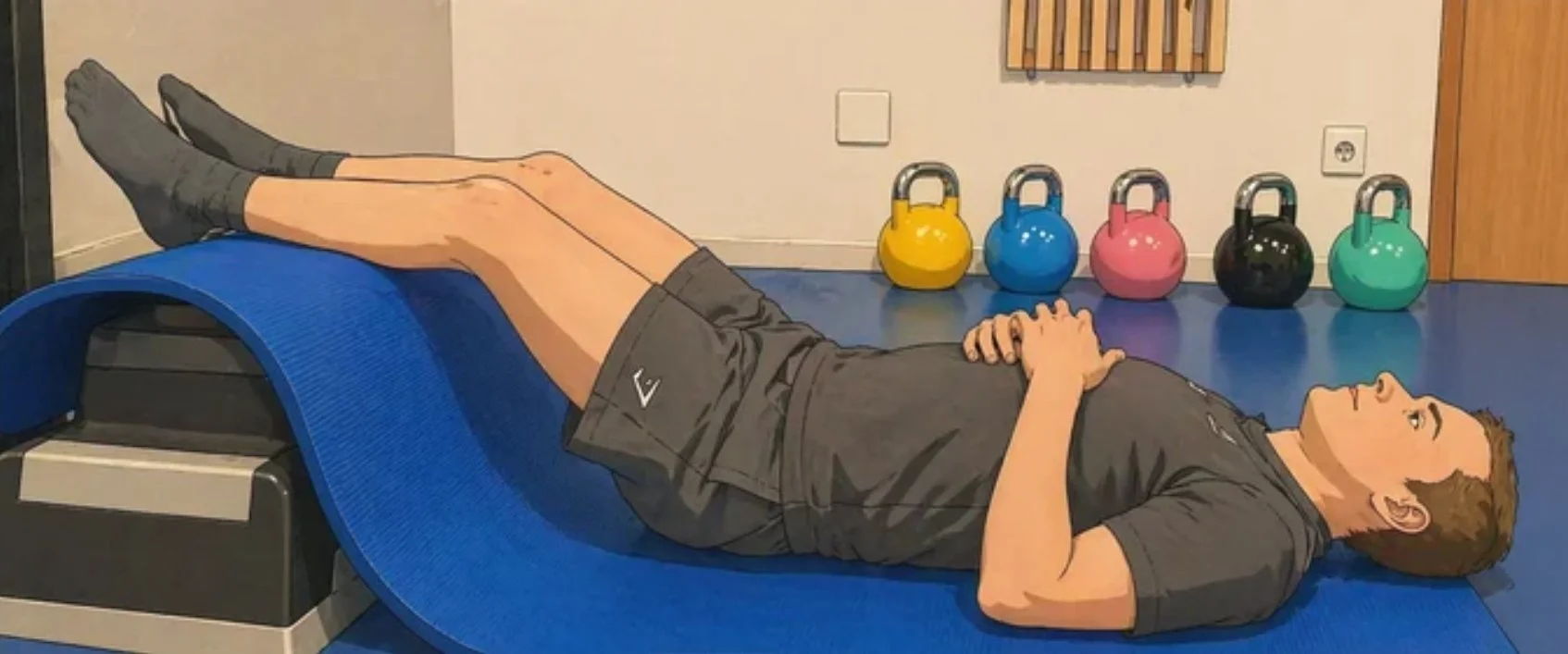
1. Elevation - Reduces Swelling
In the first days after surgery important inflammatory and healing processes occur within the joint. During this phase your knee will likely swell up. Regular elevation can help to reduce swelling, improve mobility and improve muscle function. It is sensible to elevate the leg multiple times a day for at least 15-20 min. (knee above the heart). It is also helpful to perform 30 ankle pumps (moving the feet up and down) every hour throughout the day. This can further reduce swelling and can also protect against deep vein thrombosis.
2. Passive Knee Extension - Improves Mobility
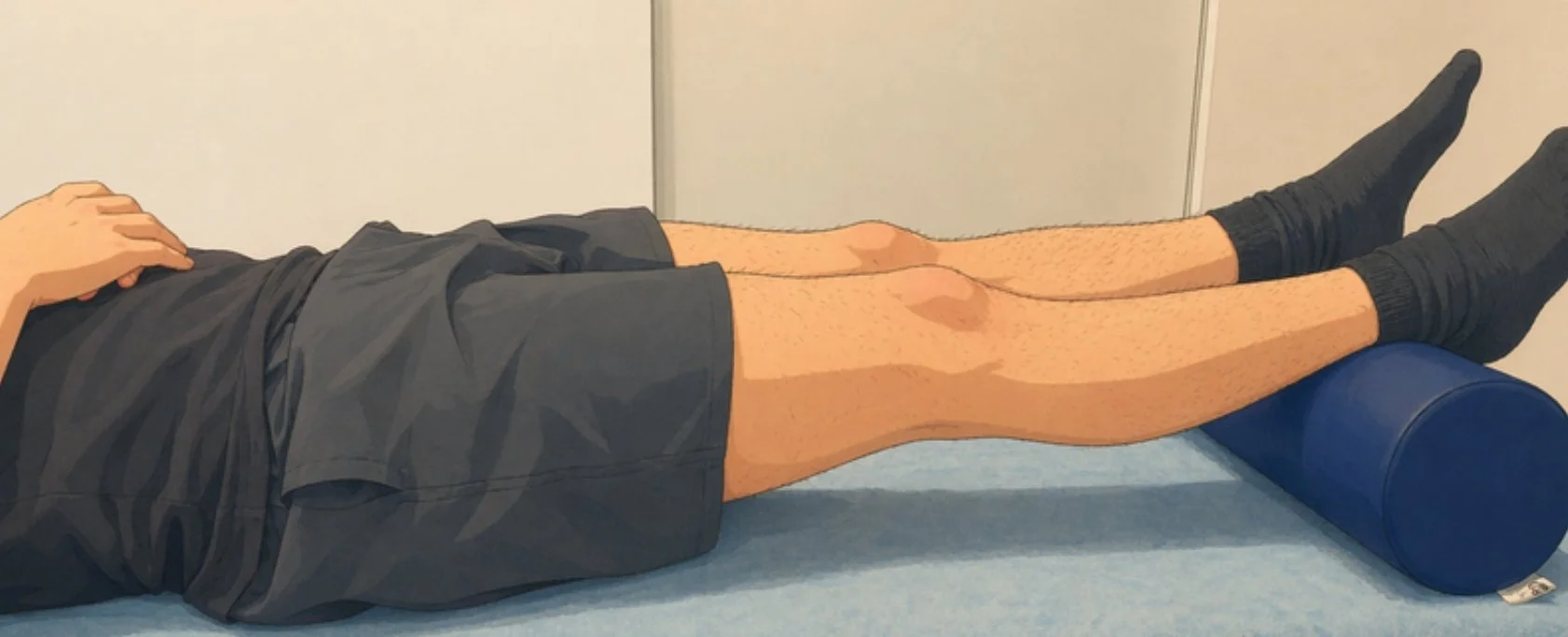
Early after surgery it is important to practice complete knee hyperextension. This works best by removing the knee brace and placing a firm, relatively high pillow underneath your heels. Both legs should completely relax in this position. Initially, your knee will not love this exercise, which is why it is ok to only spend short periods of time in this position. Passively hyperextend your knee 5-20x per day for several minutes at a time.
3. Activating the Quadriceps Muscle - Reduces Muscle Inhibition
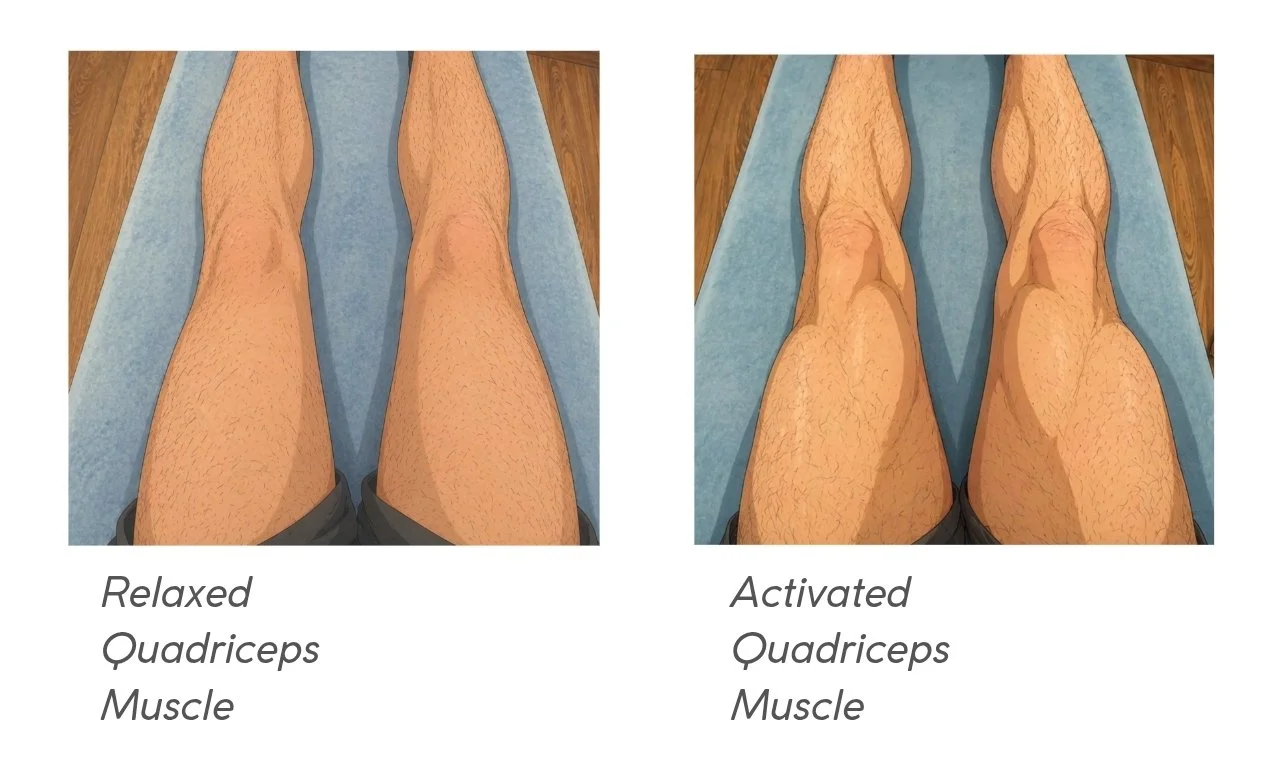
To regain control over the Quadriceps muscle, you can squeeze the front of your upper thigh for 10 seconds while pulling the kneecap upwards and pushing the back of the knee into the ground. Your Hamstring muscles (back of the thigh) should remain relaxed. You may have to adjust the intensity of your muscle contraction depending on the sensitivity of your knee. This exercise is usually a bit uncomfortable, but should not hurt. It is recommended to perform at least 30 contractions 3 timer per day. Your Physiotherapist can show you, how to safely and effectively enhance this exercise using Electrical Muscle Stimulation.
4. Heel Slides - Improves Knee Flexion
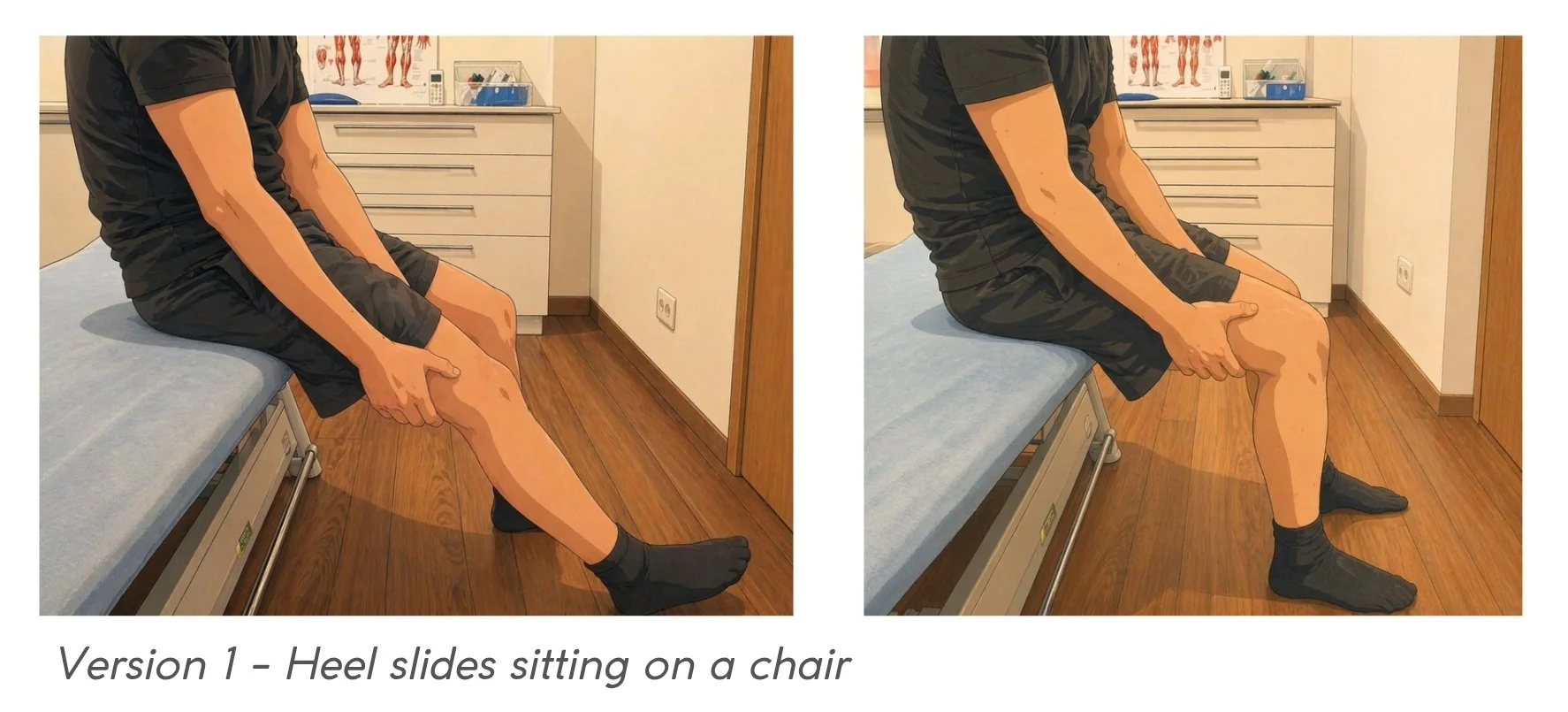
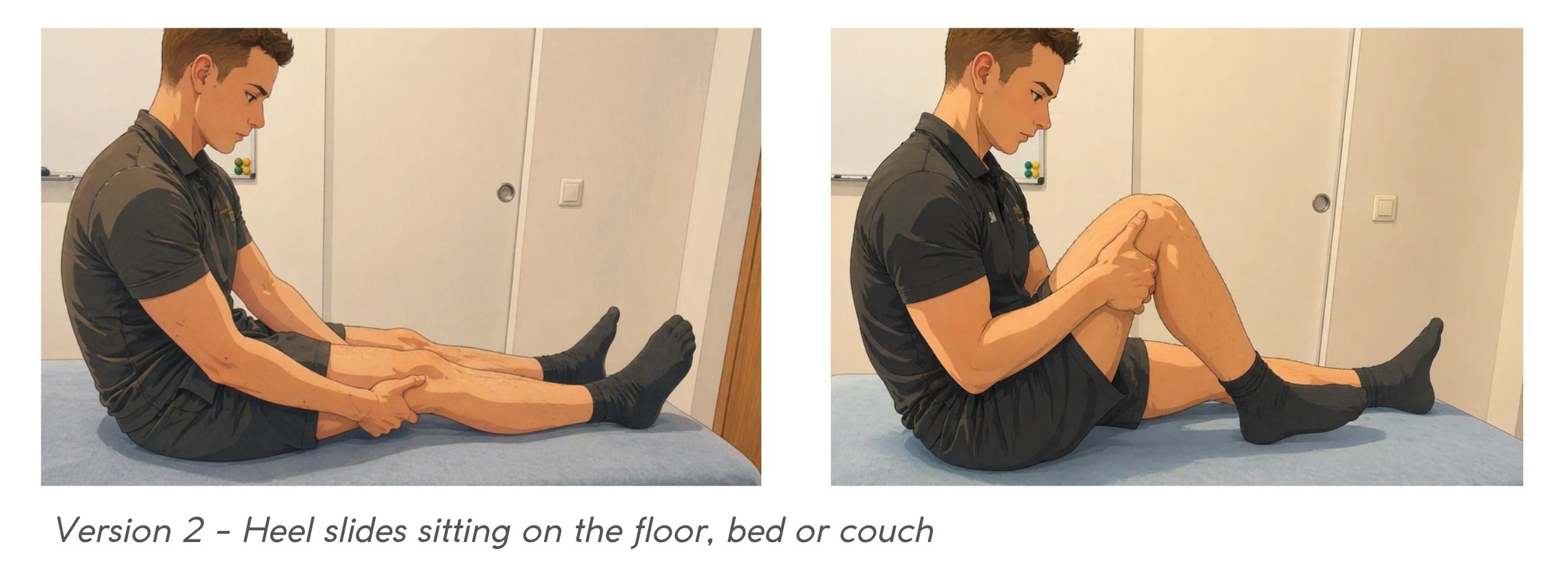
You can start practicing knee flexion immediately after surgery. Ideally, you are allowed by your doctor take off the knee brace and bend the knee within the pain free range as far as possible (please consult your doctor about brace use and range of motion limitations). A good strategy could be to flex the knee 3x per day 10x in a row while resting in the flexed position for 10-30 seconds each time. The smoother the surface you practice on, the better you will be able to flex the knee. You can use your hands to assist with the movement. Usually, patients start out with Version 1 (sitting on a chair) right after surgery and transition to Version 2 (sitting on the floor or bed) after a few days/ weeks.
5. Active Knee Extension while Walking - Improves Gait Pattern
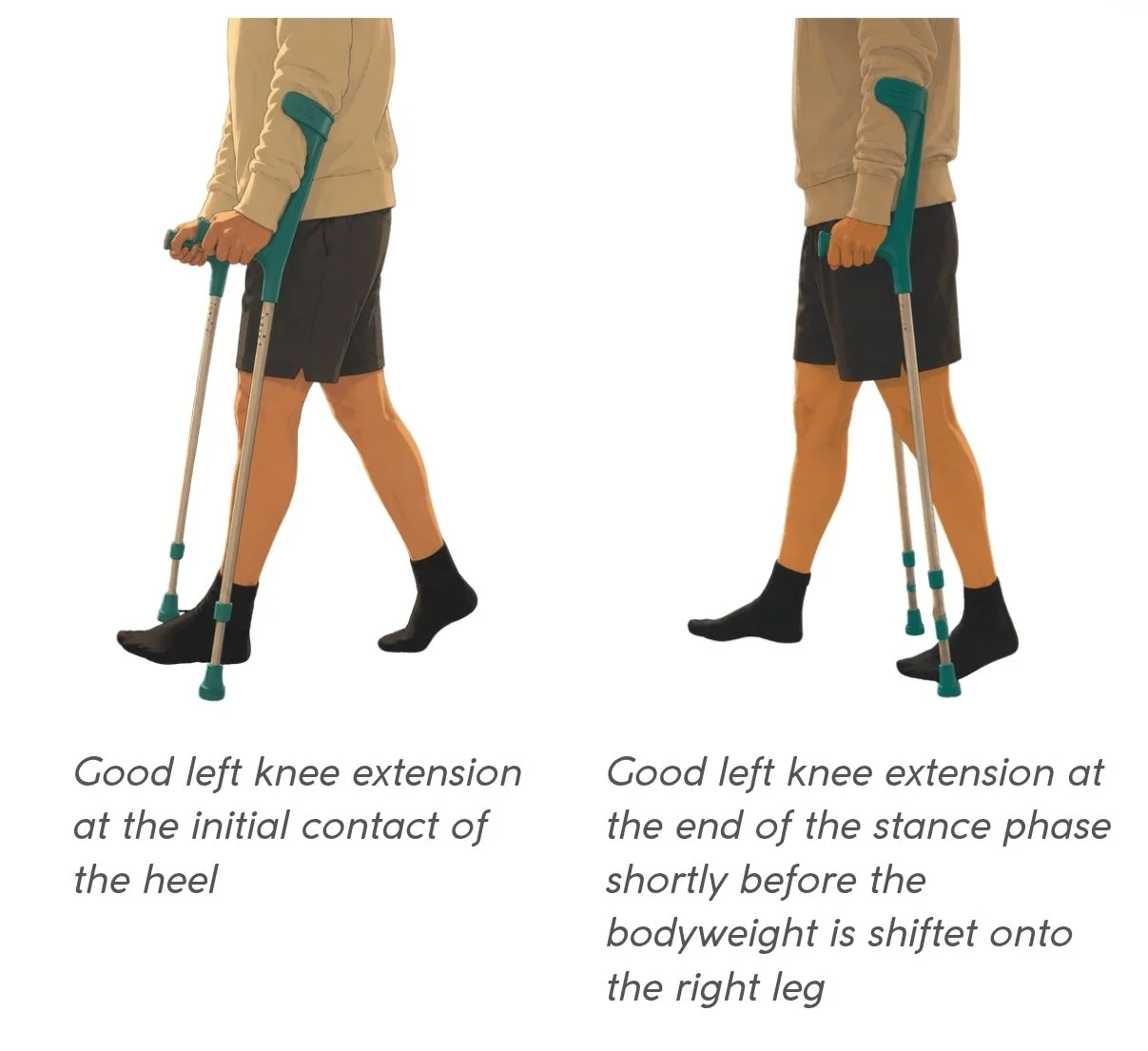
During the first weeks after surgery your body intuitively wants to protect your knee by not letting you fully extend it during walking. As a result, you, like almost all other patients, probably display some kind of postoperative limp. You can improve your gait pattern by focusing on the activation of the Quadriceps muscle and the active knee extension during the stance phase of your healing leg. In other words, you can reduce the limp by making sure that your knee is always extended while there is pressure on it, starting at the very first heel contact (see left picture) and ending right before the bodyweight is shifted onto the healthy side (see right picture). Once the pressure is shifted away from your healing leg, you can relax the Quadriceps, flex at the knee and let the limb swing forward in preparation for the next step. Make sure that you still adequately offload the affected limb while practicing active knee extension. Your doctor and physiotherapist will inform you about proper weight bearing and proper use of crutches.
6. Cooling - Reduces Pain and Muscle Inhibition
Cooling your knee can temporarily reduce pain and muscle inhibition. You can cool up to 3x per day directly before or in between exercises by applying a cool pack from the freezer, wrapped in a piece of cloth, to the front of your knee. The cold application can last between 5 and 15 minutes and should result in pain reduction. Cooling should never feel uncomfortable or painful. In case it does, you probably need a thicker piece of cloth. If your knee is not warm, does not hurt or cooling does not reduce pain, you do not have to force yourself to cool.
7. Electrotherapy - Blood Flow Restriction Training - Compression Devices - Massage
There are other measures which can be taken to further enhance your recovery early after surgery. It is important that you talk to your medical team about the potential and risks of using electrotherapy, blood flow restriction training, compression devices or massages, as inappropriate usage can cause serious harm.